New Results
Detection of Multiple EMRIs
As a result of some modifications in the light of signal processing techniques and our noise spectrum estimation I have got much finer results. I can now apply much higher temperature and still with good swapping rates. In some cases I applied tempearture to full posterior instead of only likelihood function it is because I think for higher temperatures our likelihood becomes weaker than prior which is agianst the Bayesian spirit that is one should not let the prior dominate the data. This posterior tempering definitly imroved not only regular Metropolis acceptance rates but also inter-chains swap rates. Two parallel tempering MCMC codes were run in order to detect different signals from a data set containing 6 different EMRIs. Some months ago I tried to detect the same signals and although one of the signals was detected but the code actually struggled to show some thing. Also in those attempts I used parallel but non-mpi MCMC codes with very high temperature to see if any chain converges. In those attempts though the hottest chain showed some improvement but of course that was the hostest chain not the actual coldest chain and linking them was far more big problem as to construct a temperature ladder to reach that temperature required a lot more chains (see those results here Old Results). But this time some modifications were made to our method and the code now successfully picked up three signals till date (though each time I have to wait for several days to get some free slots on BeSTGRID). Following are the density and trace plots of the first two signals. You can compare these results with those given ( Old Results). For better quality please click on the figure to view it in pdf format.
First signal : A shorter MCMC run
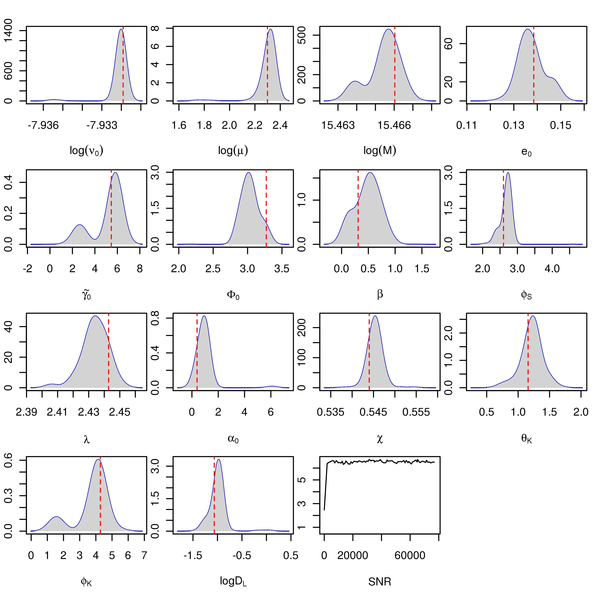
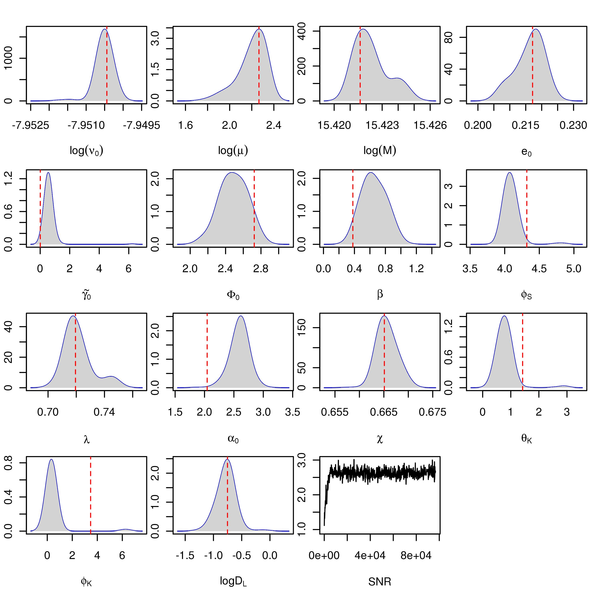
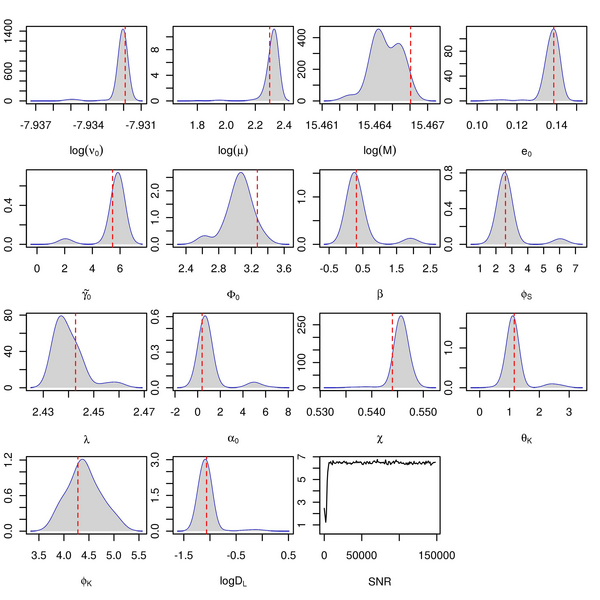
Density Plots
This was a short run i.e. less than 150K iterations with 30 chains PTMCMC. Here are the density plots for the coldest chain.
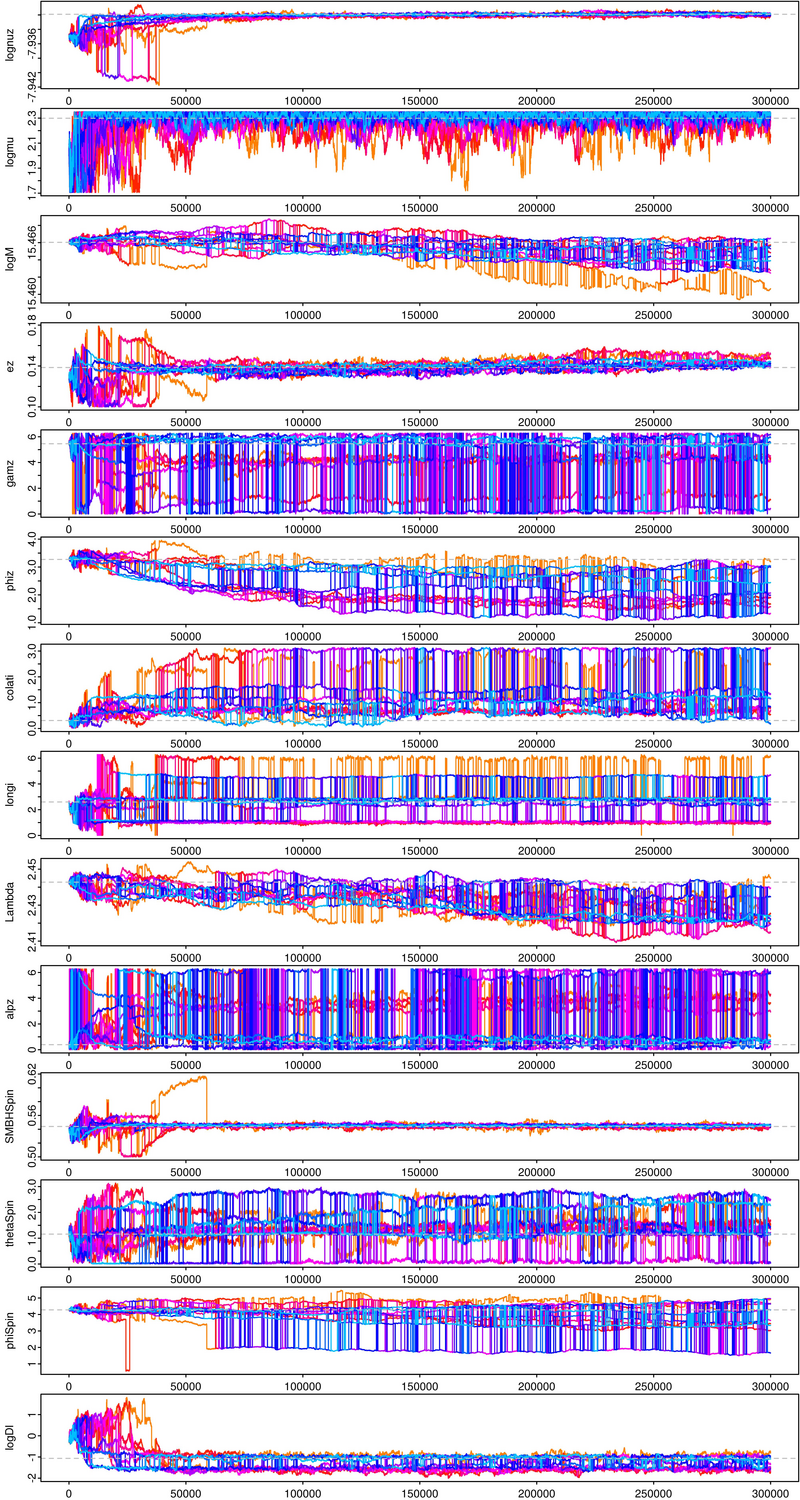
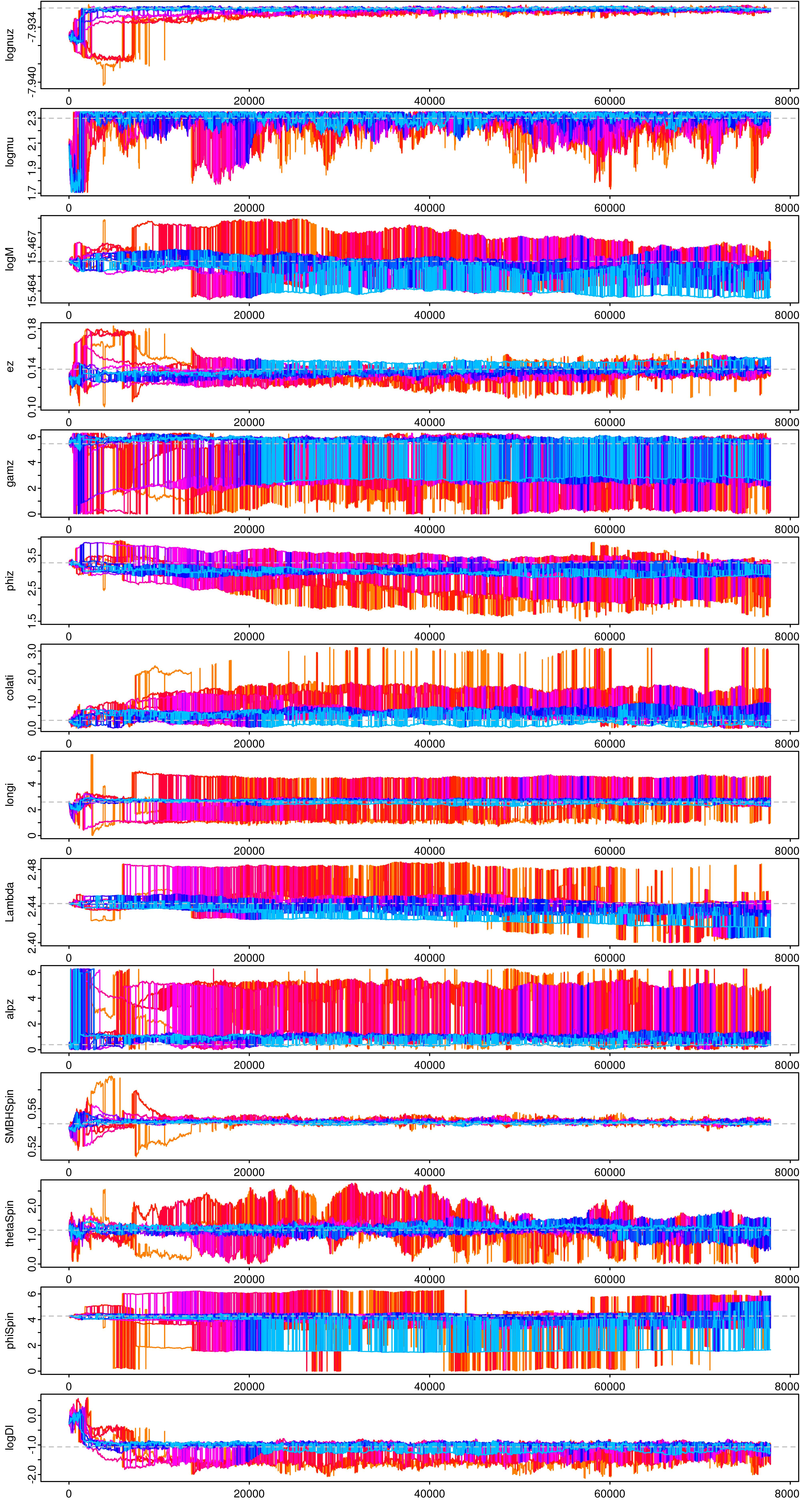
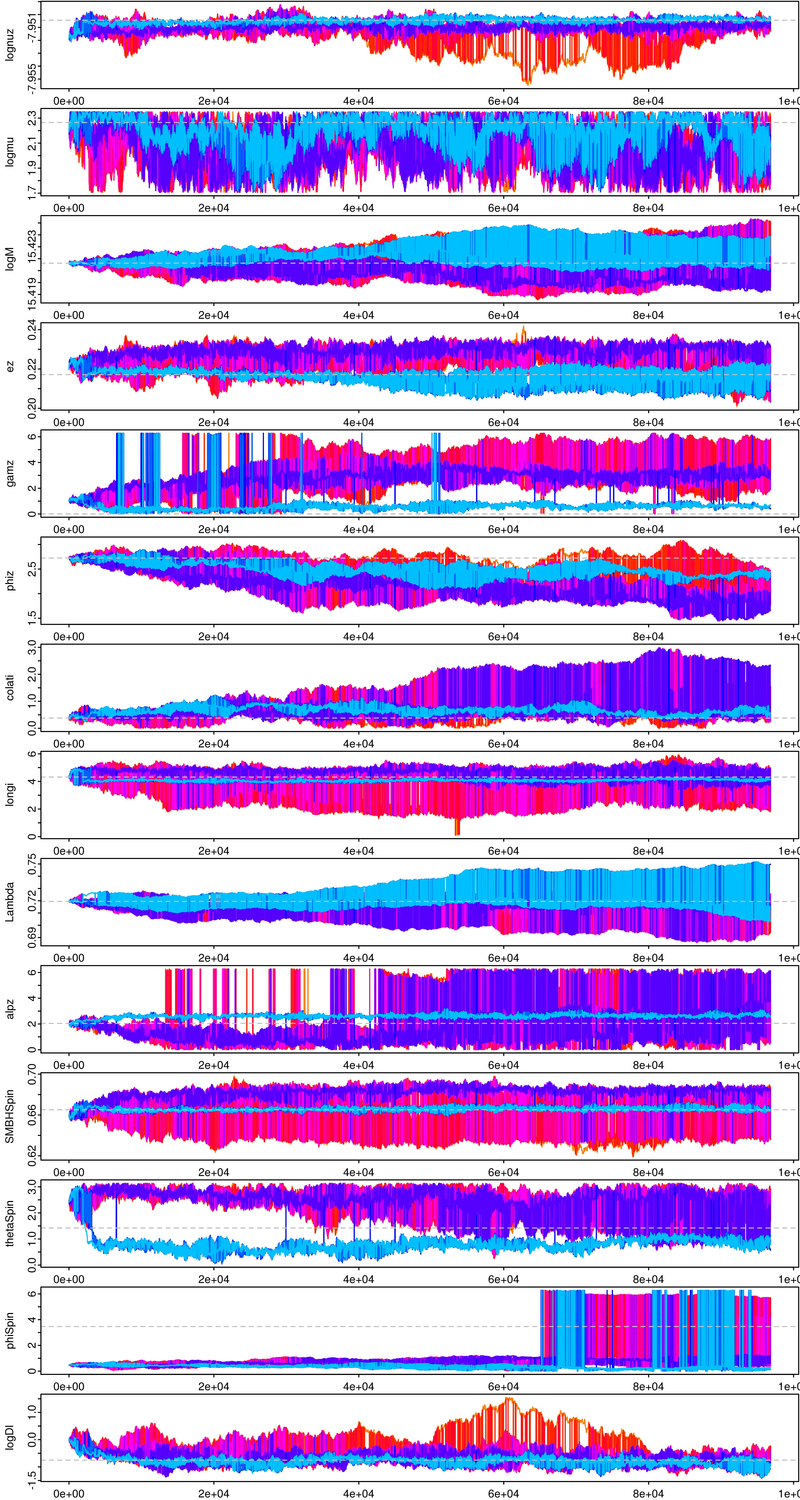
Trace plots of the first 10 chains only
The trace plots for the first 10 chains are given in the following figure the rest of 20 were not plotted because then the plot becomes too messy and nothing can be seen clearly.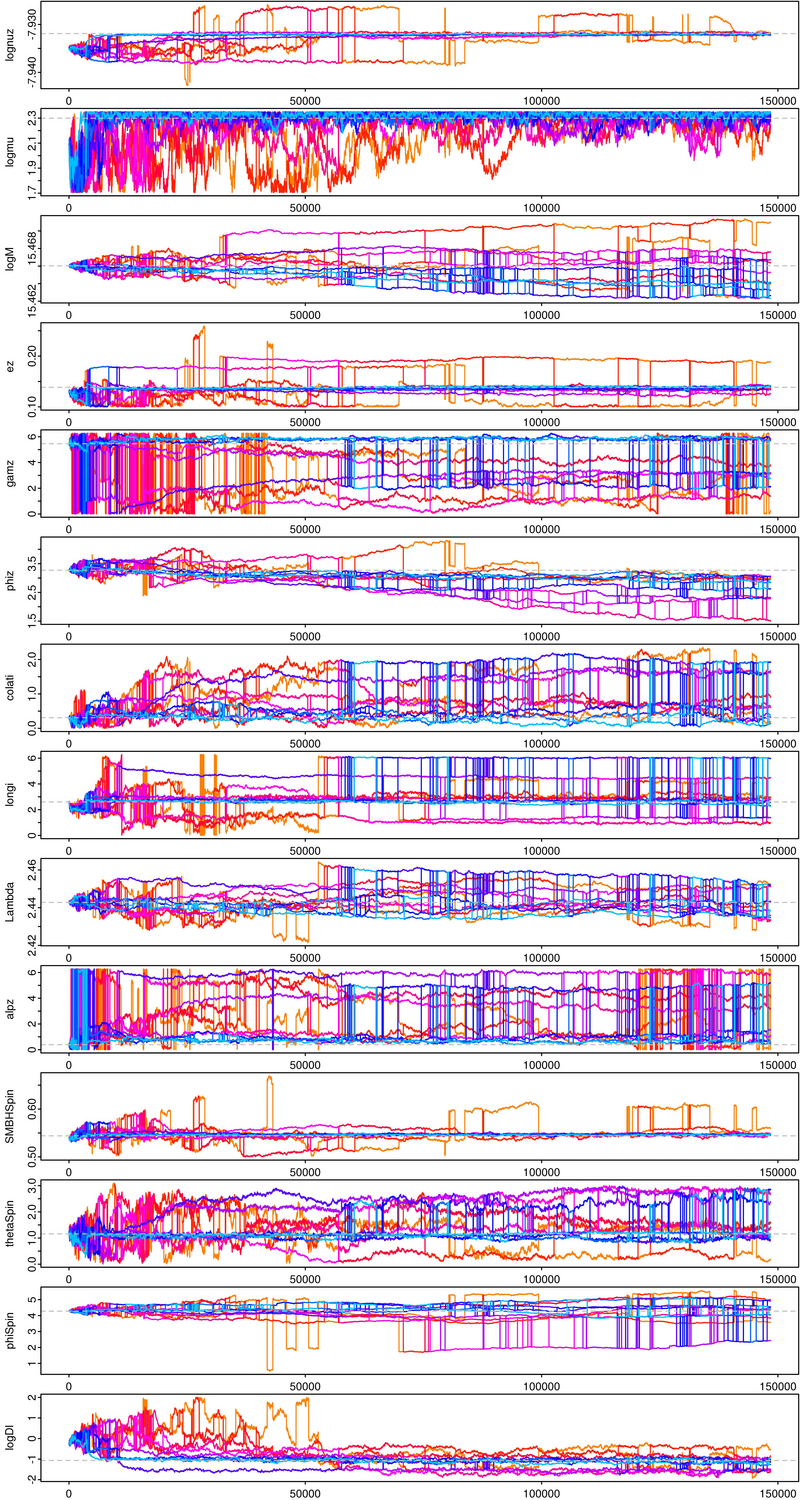
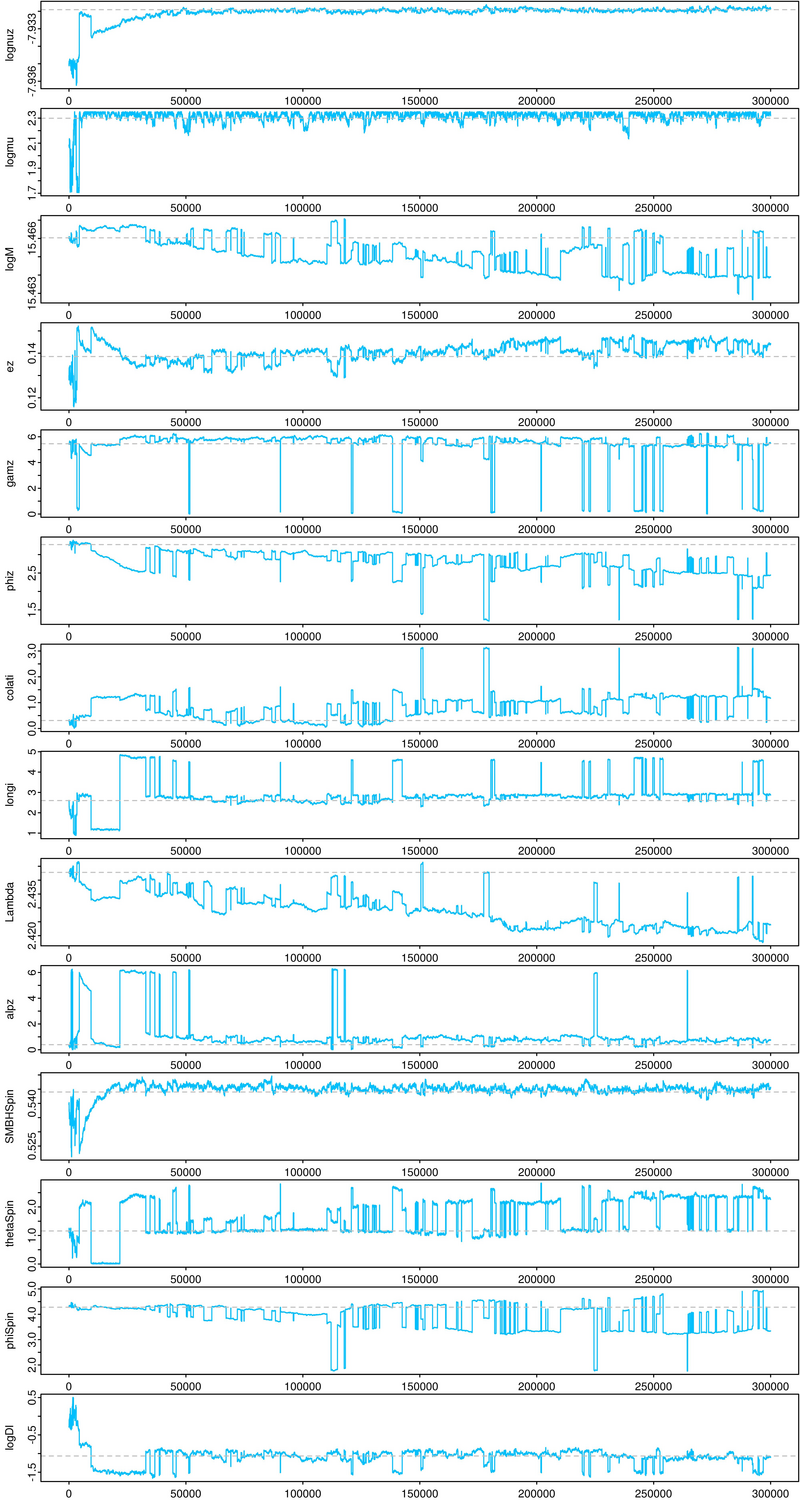
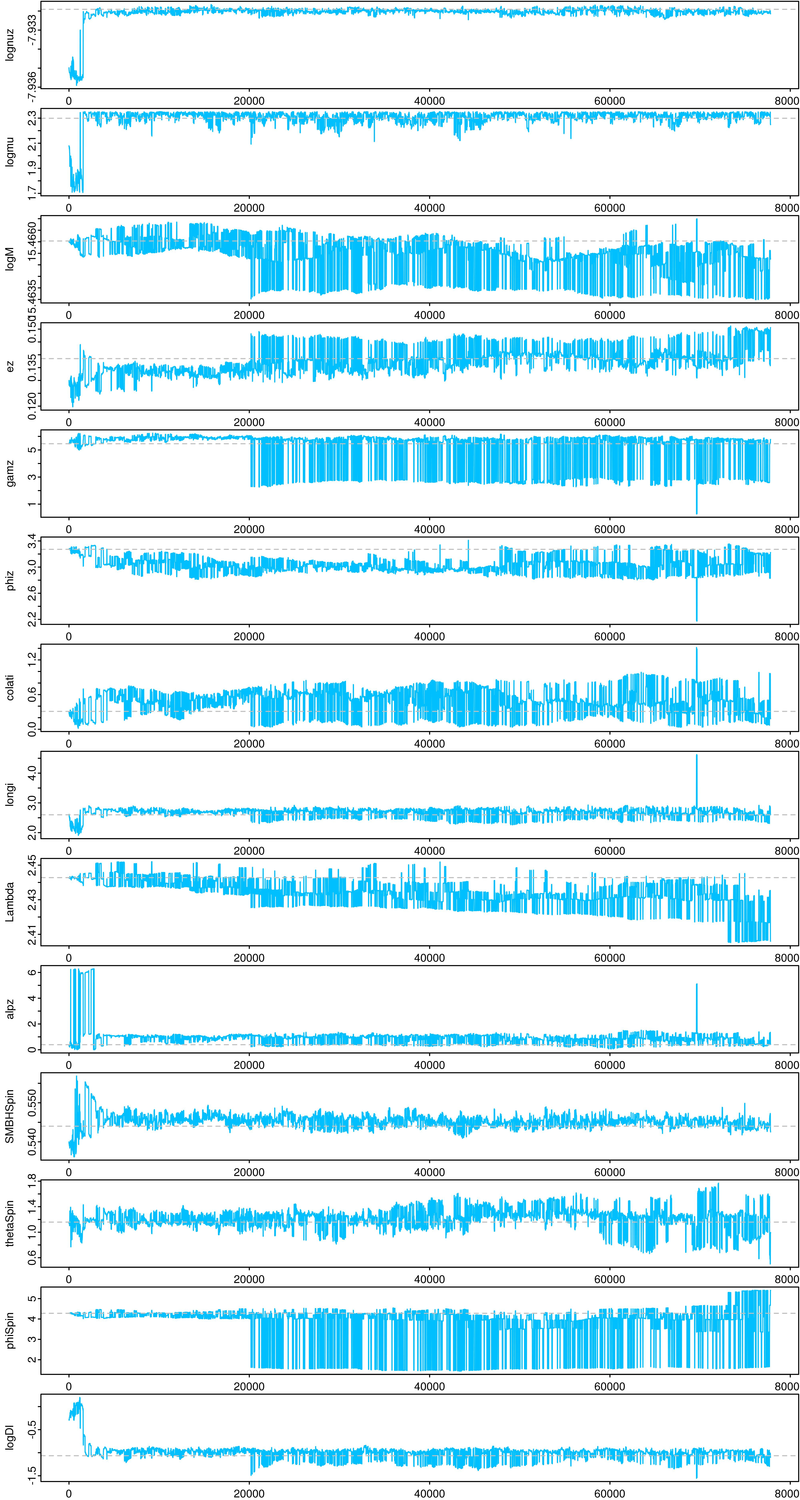
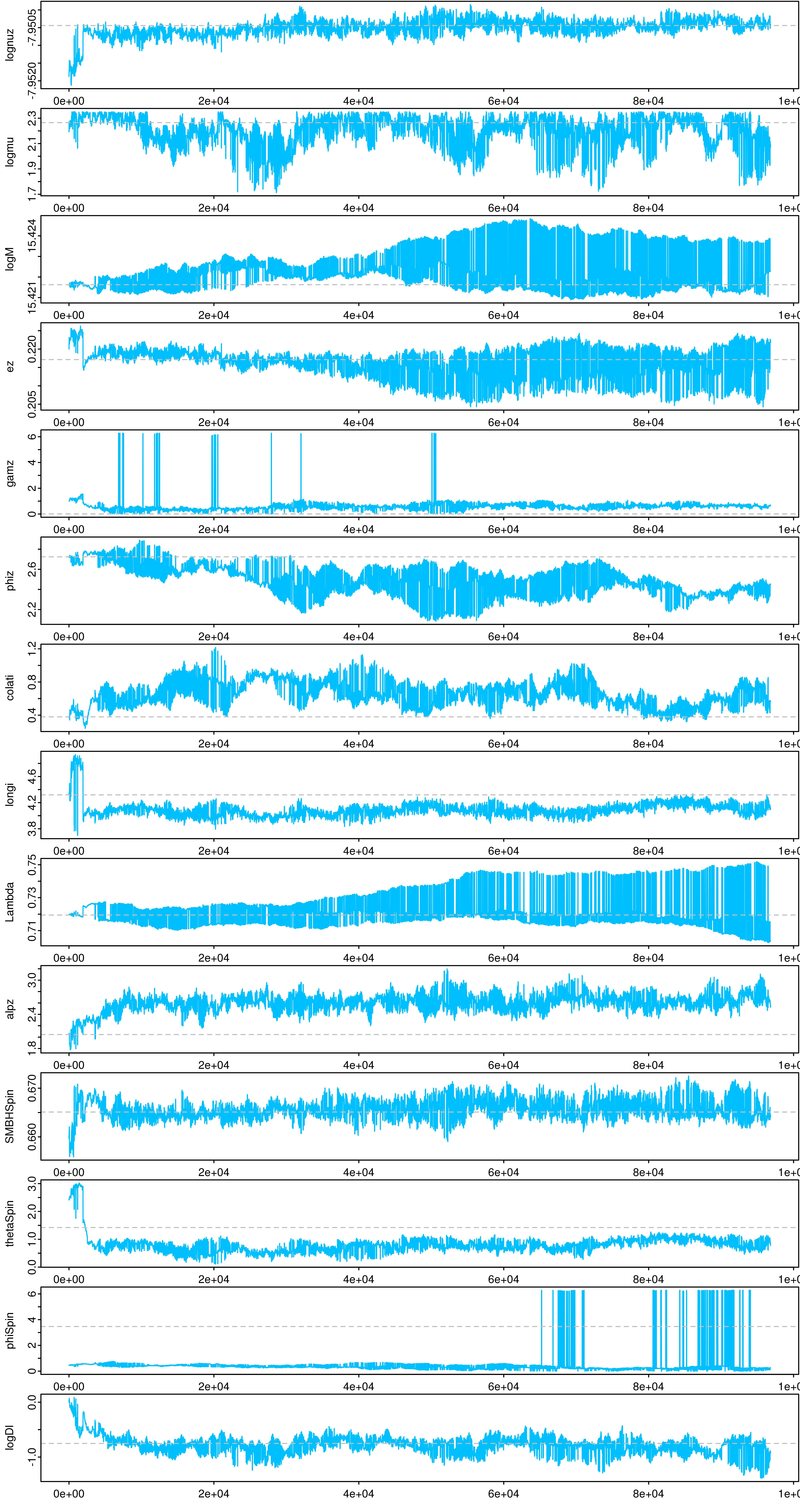
Trace plots of the first (coldest) chain
This above multiple chains plot still looks like a mess but for most of the key parameters most of chains are converged. If we plot the first five chains then they will be looking like a single chain. The hotter chains does not stay at one mode they keep moving here and there helping colder chains to settle. Following is the traceplot for the coldest chain.
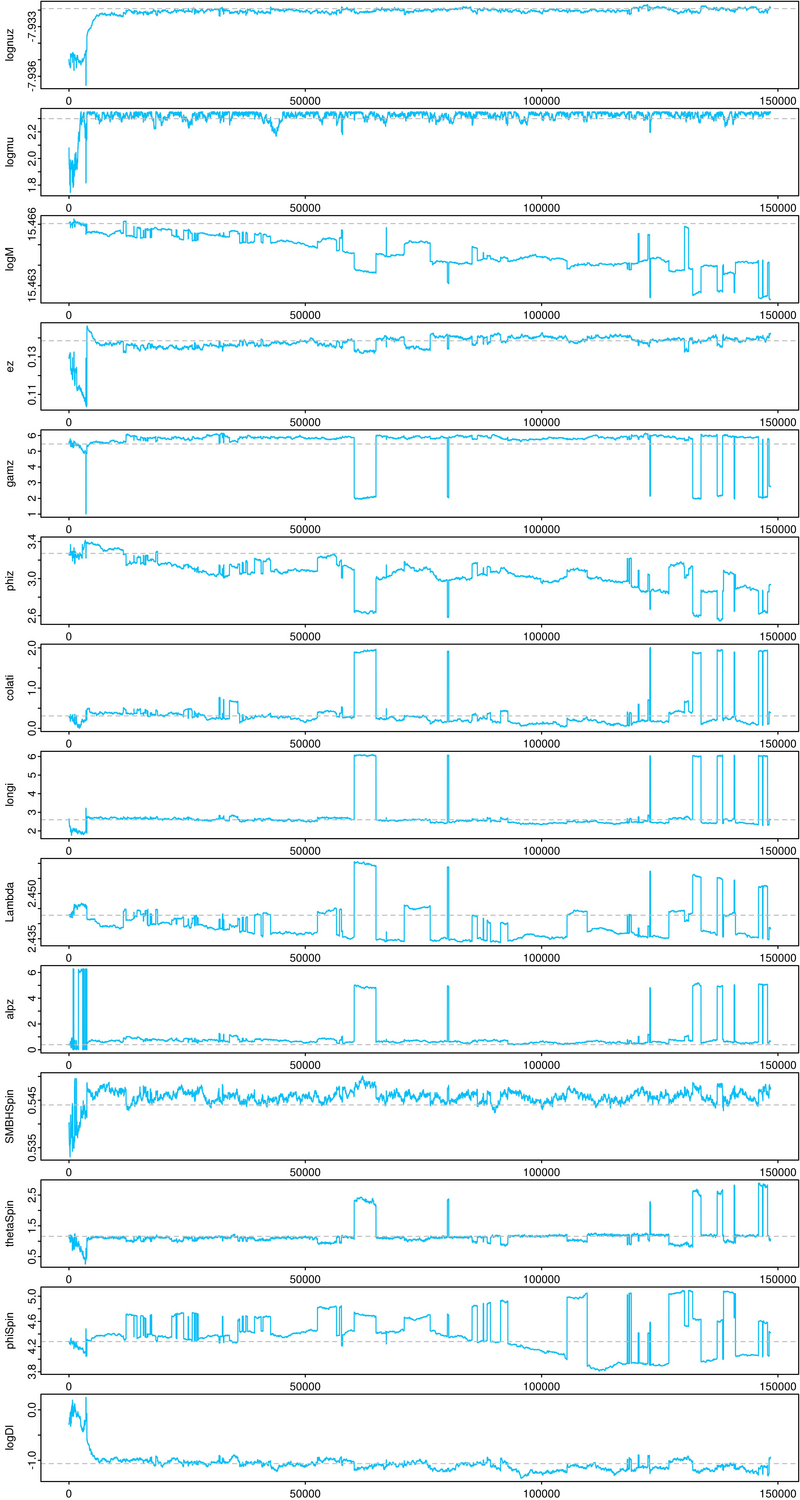
Trace plots of the first (coldest) chain
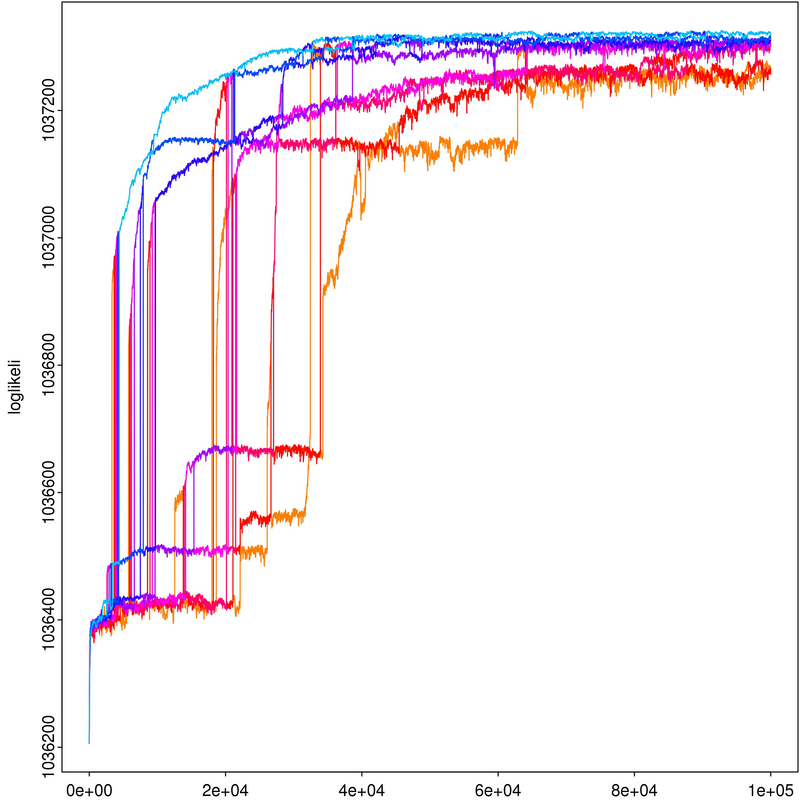
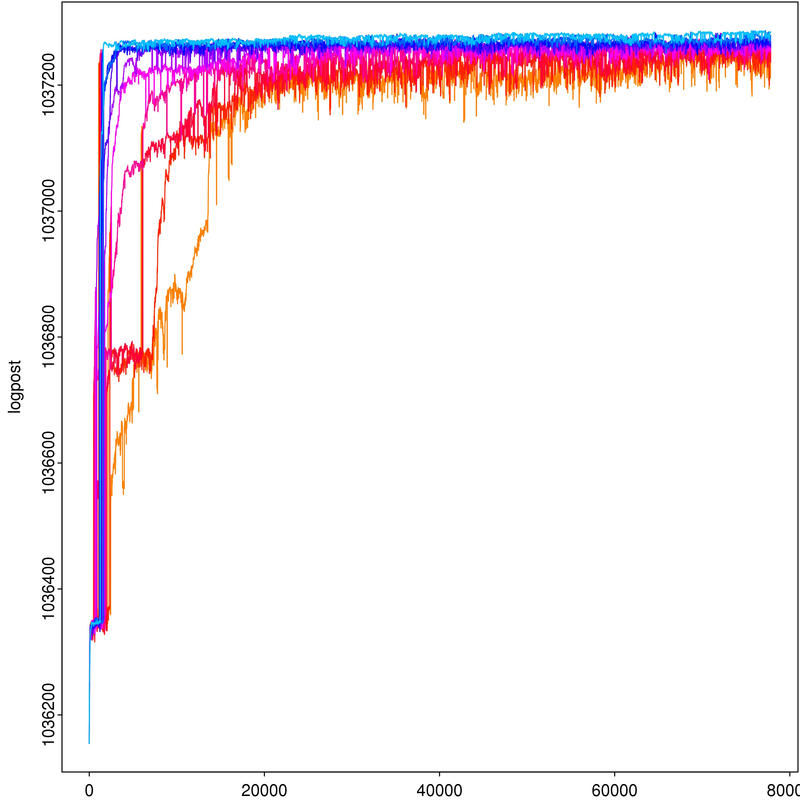
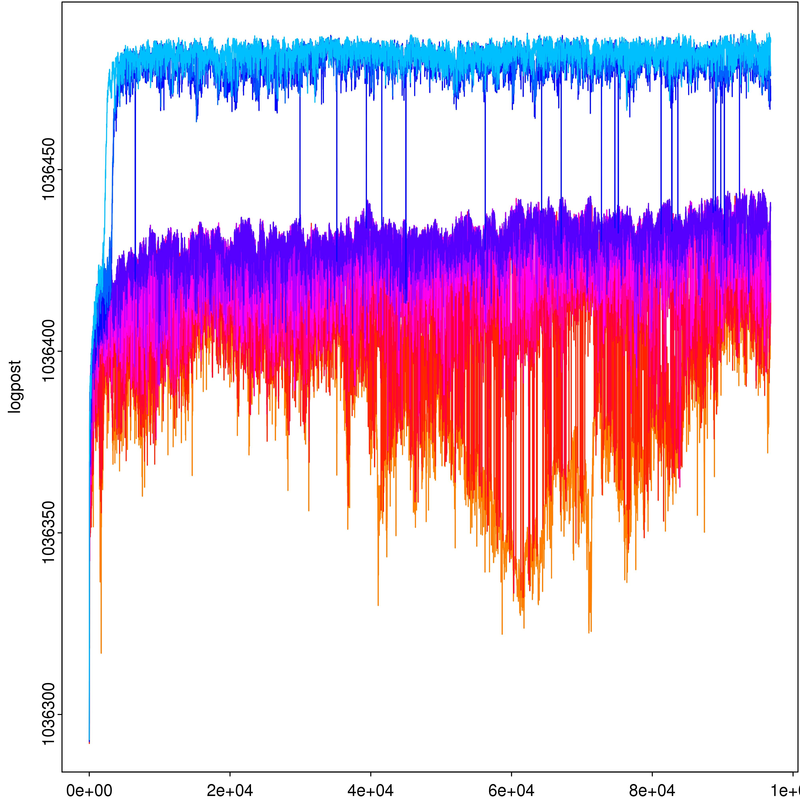
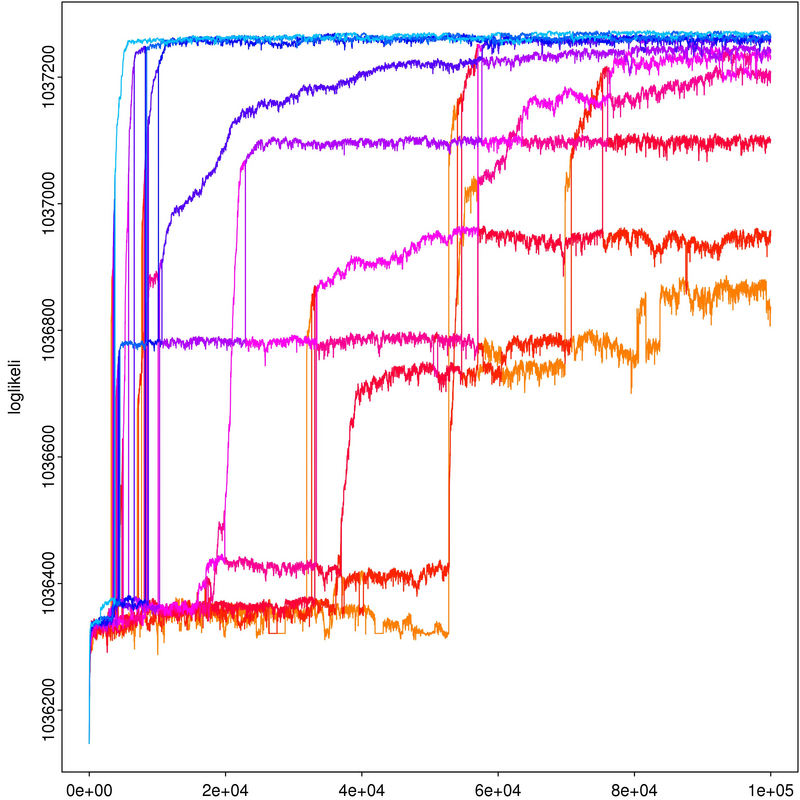
The log-likelihood behaviour at different temperatures is depicted in the following figure. This is actually a zoomed part of the log-likelihood traceplot and it shows how are different chains exchanging information at some points and how is the code progressing towards a global mode.
First signal : A longer MCMC run
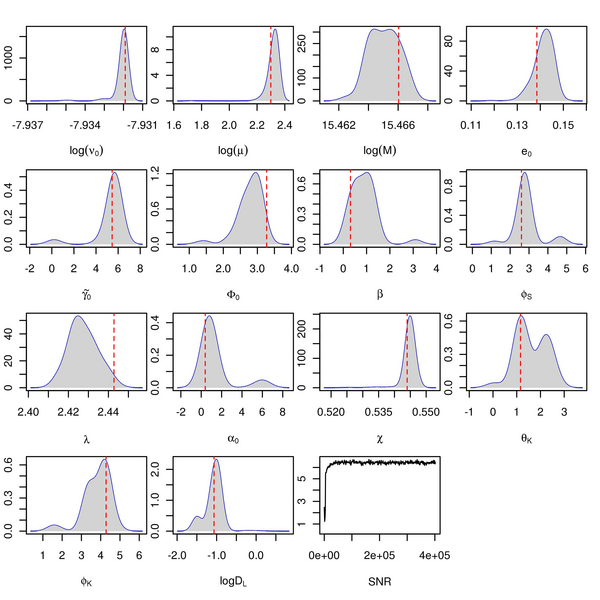
Following denisty and trace plots are of the same signal as above but is a little longer MCMC run. In longer run the code behaviour gets improved.
Density Plots
Trace plots of the first 10 chains only